Can a Sore Spot in Muscle Cause Pain Somewhere Else?
Some people feel pain in their head, shoulder, hip, or leg and wonder why the tender spot is somewhere else. One possible explanation is referred pain from a myofascial trigger point: a sensitive area in muscle that can send pain to another place when it is pressed or stressed.
What research suggests
Research going back many decades shows that muscle can cause pain felt away from where it starts. Clinical studies have also found that stimulating tender spots in muscle can reproduce a person’s familiar distant pain. One common example is upper trapezius trigger points referring toward the temple and looking a lot like tension type headache. Hip and buttock muscles can refer into the thigh or leg and sometimes look like sciatica.
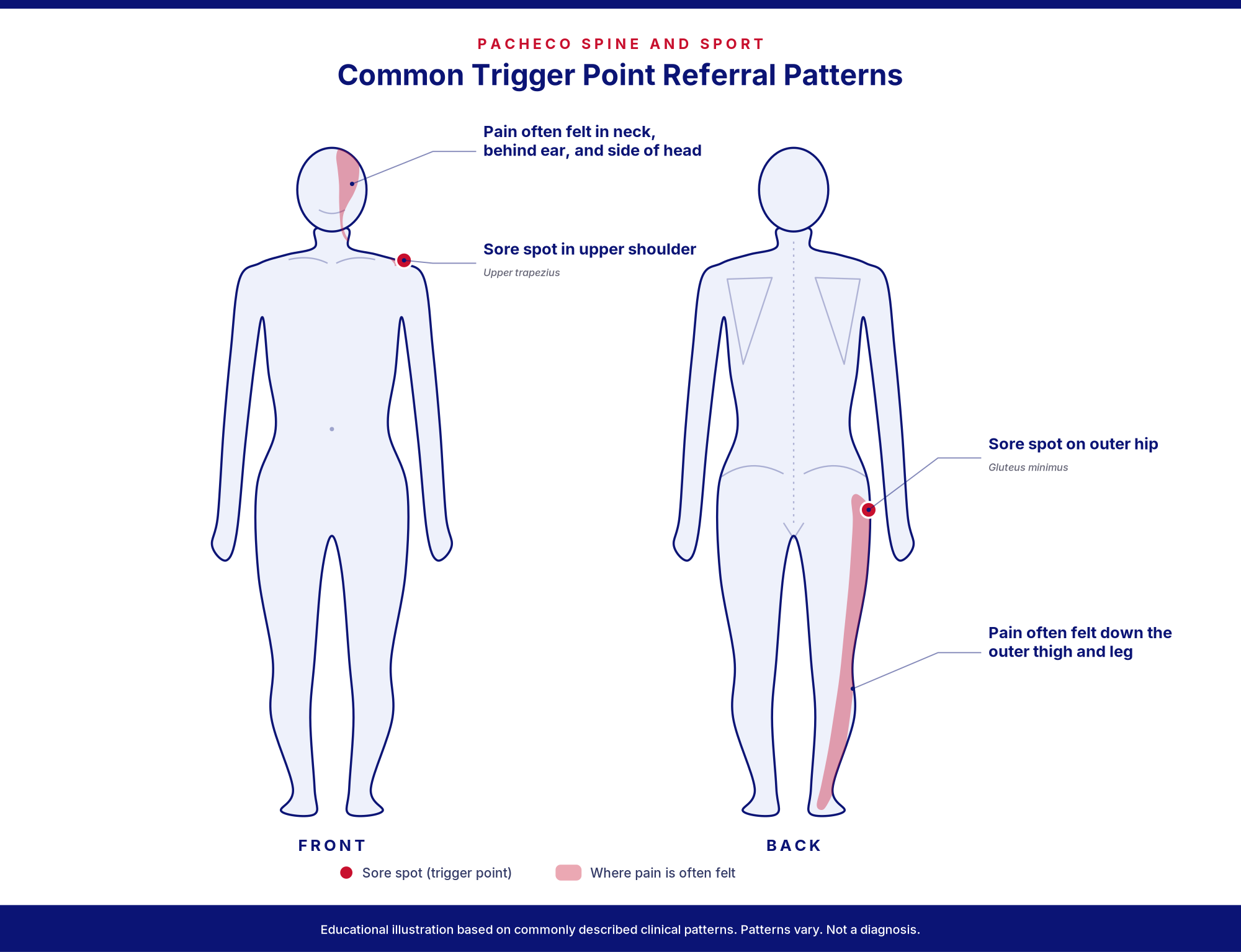
Common trigger point referral patterns for upper trapezius and gluteus minimus. Educational illustration; patterns vary; not a diagnosis.
A few honest limits matter too:
Finding every trigger point by hand is only moderately reliable between examiners
Soft tissue work and dry needling can help in the short term, usually with modest benefit on current evidence
Trigger points are one piece of the puzzle, not a stand alone diagnosis
How we detect trigger point related pain
At Pacheco Spine and Sport, we start with your story and a movement screen. We then carefully check tender spots to see whether pressing them reproduces the pain you know. If the pattern fits, that helps guide care. If it does not, we keep looking for other causes.
How we treat it
When a trigger point pattern fits, care may include:
Dry needling
Soft tissue release
Cupping
Taping, including RockTape
Chiropractic adjustments when they fit your presentation
These options are chosen for your needs, not as a fixed package.
How we manage it for lasting change
Short term relief is useful. Keeping gains usually means progressive exercise and loading so the area can handle daily life and training again. That may include corrective exercise and sport performance style rehab when it fits your goals.
When to ask us
If distant pain is part of your story, ask whether a trigger point pattern may be involved. Get medical care right away for red flag symptoms such as new or worsening leg weakness, numbness in the groin or inner thighs, trouble controlling your bladder or bowels, fever, unexplained weight loss, or pain after a major fall or injury.
Pacheco Spine and Sport
1067 Gilmer Street, Suite C
Sulphur Springs, TX 75482
903-629-5126
This post is for general education and is not a substitute for personal medical advice. Talk with your provider about what is right for you.